
Gas Logs for a Building
List the units this job covers and what each fireplace burns. We reply with the plan and the price per chimney.
What Each Unit Gets
Gas logs suit an open fireplace that is used for the look more than the heat. We measure the firebox for burner width, confirm the flue can carry a vented set, and fit the burner, logs and a valve the occupant can reach. A vented set needs the damper kept partly open, so we fix it that way. If the room or flue rules a set out, we say so. The price per fireplace follows the set chosen.
Logs for the Look, Inserts for the Heat
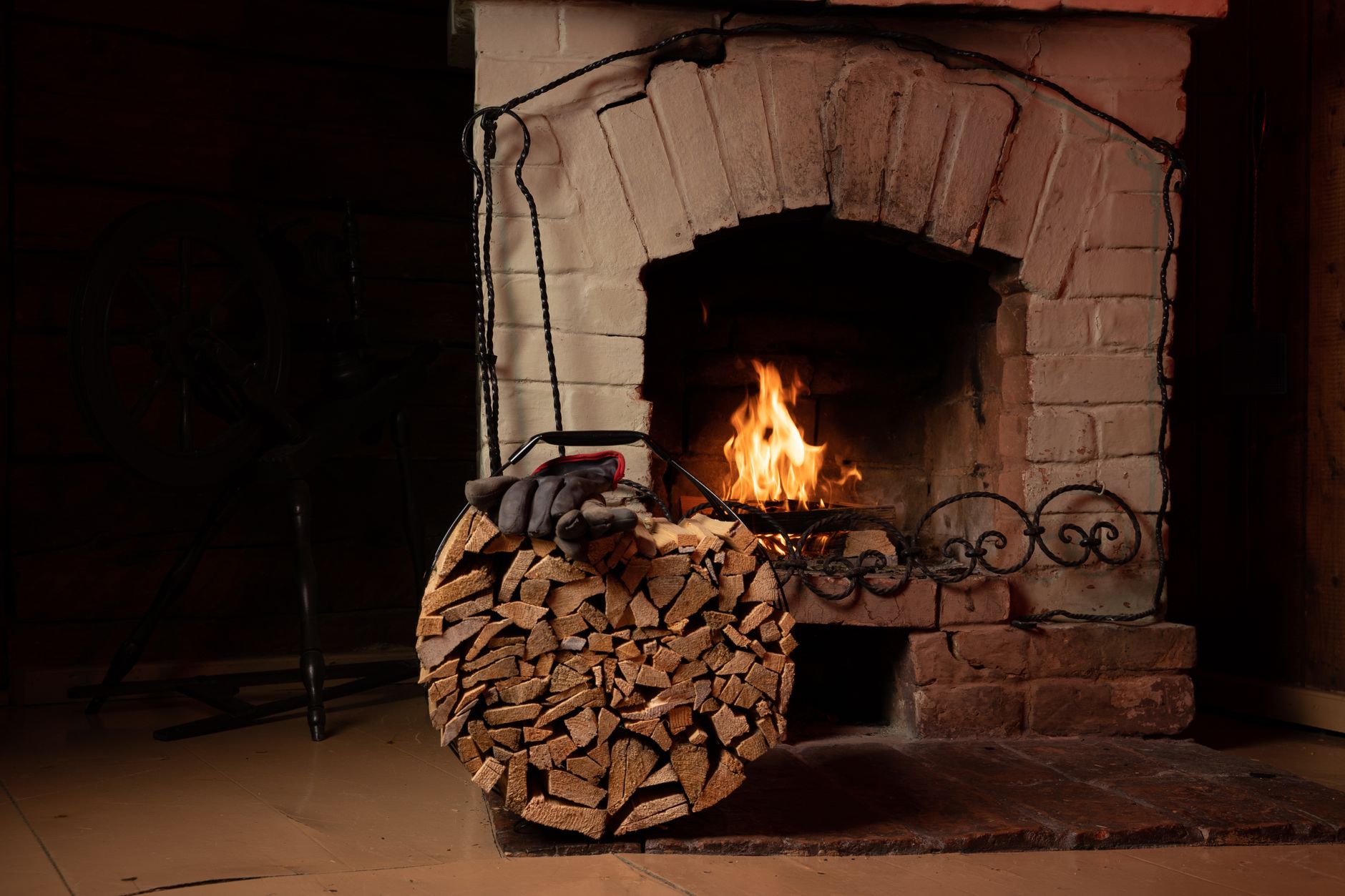
Picture ceramic logs stacked on a gas burner pan, and that pan placed inside the brick firebox a unit already has: that is a log set. It gives a gas flame with no splitting, no sparks on the rug and no bucket of warm ash for a tenant to carry to the bins, which matters to an owner more than it does to a single household. What a set does not do is heat a room well. The front of the fireplace stays open, and the exhaust of a vented set leaves through the chimney along with a fair share of the warmth. So the first question we ask, unit by unit, is what each fireplace is for. If the answer is a fire to look at on winter evenings and a selling point in the listing, a set is the right size of job. If the answer is heat for a living room, an insert is the better spend, and we can put both on the same sheet for comparison.
The sets we install are vented, which means they rely on a working chimney. That puts the flue at the center of the job, not the logs. Before gas is run to any firebox, we look up its flue for soot, a nest or loose tile, check that the damper moves, and fit a clamp that keeps the damper from closing on a lit burner. Where the chimney has not been swept since it burned wood, the sweep comes first. The firebox is measured across the face and the rear wall, front to back and floor to lintel, and those figures go in the unit record so the set chosen actually fits. The written figure for each unit names the set, the burner size, the gas line work and the labor. Owners fitting several units often pick one model for all of them, which keeps spare parts and service simple.
Install Day and What Goes in the Unit File
On install day the gas line is brought to a key valve or a remote-ready valve beside the hearth, the burner is set and leveled, and the logs are placed in the pattern the maker drew, since a log out of place can push flame onto the next one and coat it in soot. Every fitting is tested for leaks before the burner is lit. We then run the set long enough to watch the flame settle and the draft carry the exhaust up the flue. The occupant is shown how to light it, how to turn it off and where the gas shutoff is. If the unit is vacant, the instructions are left taped inside the hearth screen with the manual. Ember material and glowing pieces that came with the set are placed last, because they shift during shipping and are the first thing a new tenant asks about.
The unit file records the brand and model, the burner rating, the valve type, the date, and the condition of the damper and flue at the time. A building with several sets ends up with one list showing every fireplace, what is in it and when it was last serviced. That list is the first page we read on the yearly visit, when each set is cleaned, its pilot assembly looked at and its logs reset. It also helps when a unit changes hands, since a buyer's agent can see what is installed and when it was checked. If a log set is going into a fireplace that has never had gas, we look at where the nearest supply is and how a line would reach the hearth, and that routing is written into the quote with the rest.
How Whitley Chimney Care Handles a Job
Unit Numbers
Every finding filed under the unit it belongs to
One Roof Climb
All the stacks on a lot read in a single trip up
Prices on Paper
A figure per chimney before any work begins
Photos Filed
Pictures attached to each fireplace's page
Where we book gas logs
Pick a city to read how this job runs on buildings there.
CA
Gas Logs in Maywood
Owners occupy just 31% of homes in Maywood. Building came early, with 44% of units dating before 1950, and the city is close to built out. Each fireplace on a parcel gets its own dated sheet from one visit.
Open the city jobCA
Gas Logs in Huntington Park
Here 24% of homes are owner-occupied and renters are the large majority. Plenty of older parcels also carry added units, which can mean several fireplaces behind one gate; our sheet numbers each unit and its firebox.
Open the city jobCA
Gas Logs in Los Angeles
Brick masonry is the usual chimney on an older Los Angeles house, and many were rebuilt after the 1971 or 1994 shaking. On a multi-unit building we walk every flue in one visit and tag each as original or rebuilt in the file.
Open the city jobCA
Gas Logs in Montebello
Apartments are common, detached houses are 47% of homes and 46% are owner-occupied. Whether it is a manager with a whole building or an owner with a larger house, the visit opens every firebox and gives each its own entry.
Open the city jobMore chimney and fireplace work
Chimney Sweep
Flue brushing for each fireplace on the property, the debris bagged inside the unit and a deposit note filed under its number.
Open the jobChimney Inspection
A Level 1 visual check of each chimney on the property, every flue logged under its unit number with what we saw.
Open the jobChimney Repair
Fixes for the faults an inspection record turns up, grouped by building so one crew trip covers several stacks.
Open the jobFireplace Inspection
Room-side check of each firebox, hearth and surround, written up per unit for owners, boards and the people who live there.
Open the jobFireplace Repair
Firebox, hearth and door work for masonry and factory-built fireplaces, booked so a set of units is done in one trip.
Open the jobChimney Level 2 Inspection
Camera inspection of each flue for sales, refinances, fuel changes or after a quake, filed with stills per chimney.
Open the jobChimney Cap Installation
Mesh-sided tops for each flue on a roof, from a single small flue up to a full multi-flue crown, logged by unit.
Open the jobChimney Flashing Repair
New metal at the joint between each stack and the roofing, with a cricket added behind wide stacks where water stalls.
Open the jobChimney Masonry Repair
Brick and joint work on chimney stacks, matched to the original mortar, with each stack's repairs listed on its own record.
Open the jobChimney Rebuilds
Partial or full rebuilds of failed stacks, planned per chimney with the liner and cap settled before the first brick comes off.
Open the jobFireplace Cleaning
Room-side cleaning of wood fireplaces in each unit: ash out, firebox brushed, doors and screens wiped, hearth left tidy.
Open the jobGas Fireplace Cleaning
Yearly service for gas fireplaces in each unit: burner and pilot cleared, haze taken off the glass, flame and CO logged.
Open the jobGas Fireplace Repair
Diagnosis and parts for gas fireplaces that will not light, drop out or burn dirty, with matching models tracked across units.
Open the jobFireplace Remodel
Matching facings, hearths and mantels for one fireplace or a whole run of units, drawn and priced before work begins.
Open the jobFireplace Inserts
Gas, wood or pellet inserts fitted into existing fireplaces, each venting through its own liner and logged by unit.
Open the jobPellet Stove Repair
Service and parts for pellet stoves and inserts that jam, cut out or soot up the glass, tracked by model across a property.
Open the jobWood Stove Repair
Repairs for freestanding wood stoves and wood inserts: door seals, baffles, firebrick, glass and the pipe to the chimney.
Open the jobChimney Seismic Retrofit
Bracing, strapping or a lighter top section for brick chimneys on older buildings, planned per stack after a structural look.
Open the jobChimney Crown Repair
Repairs to the poured top of each brick chimney, sealed where cracks are narrow, recast where it has broken up.
Open the jobDryer Vent Cleaning
Lint cleared from dryer ducts in houses and shared laundry rooms, from the machine to the wall or roof outlet.
Open the jobChimney Liner Installation
Stainless liners for flues with cracked tiles or a new appliance, sized per chimney and run the full height.
Open the jobChimney Leak Repair
Finding where water enters each chimney and fixing that point, whether it is the top, the roof joint or the brick.
Open the jobChimney Waterproofing
A vapor-open water repellent brushed onto sound brick after repairs, so stacks shed rain without trapping damp inside.
Open the jobChimney Damper Repair
Repair or replacement of throat dampers that seize, rust or no longer seal, or a top-mount damper fitted at the flue exit.
Open the jobChimney Chase Cover
Replacement metal tops for the framed chases over factory-built fireplaces, made to measure so rain runs off the edges.
Open the job